
AI can save teams time and prevent unnecessary rework. But the tool itself isn’t magical. The way your team uses AI matters, especially when working with customer data or preventing bias. Some companies avoid AI tools completely to bypass these risks. But for most organizations, that’s not really an option. Instituting clear AI governance is the solution.
AI governance templates provide your organization with pre-established processes that address how your business handles risk, remains compliant, and uses artificial intelligence responsibly. In this article, you’ll discover what makes AI governance templates so valuable. Plus, we provide ten of the best templates you can start using today to improve your own AI governance.
AI governance templates act as resources that help your business implement your AI standards. They break down your artificial intelligence principles into easy-to-understand processes that your team can follow when putting generative AI (GenAI) solutions to use. Let’s cover what AI governance is and how templates can benefit your organization.
Governance defines how an organization adopts and uses artificial intelligence. This includes how teams ethically develop AI tools, manage risk, protect data from exposure while using AI, and document AI usage.
Put simply, your business’s approach to AI governance sets the standard for how your employees should use AI. AI governance dictates the choices your team will make when using AI, who is held accountable for AI risk, and more.
AI governance templates allow you to structure and enhance your governance processes.
If your organization has started setting AI governance, you understand that it takes meticulous care to create those processes. You shouldn’t have to worry about explaining how your team should approach AI every time they use a new tool.
That’s what templates are for. Templates help you clarify your AI governance initiatives and turn them into repeatable processes. With templates, you can worry less about how to manage your team’s AI use each time they leverage a new tool.
Starting AI governance from scratch can be time-consuming. Use these AI governance templates to safely scale AI throughout your organization faster.
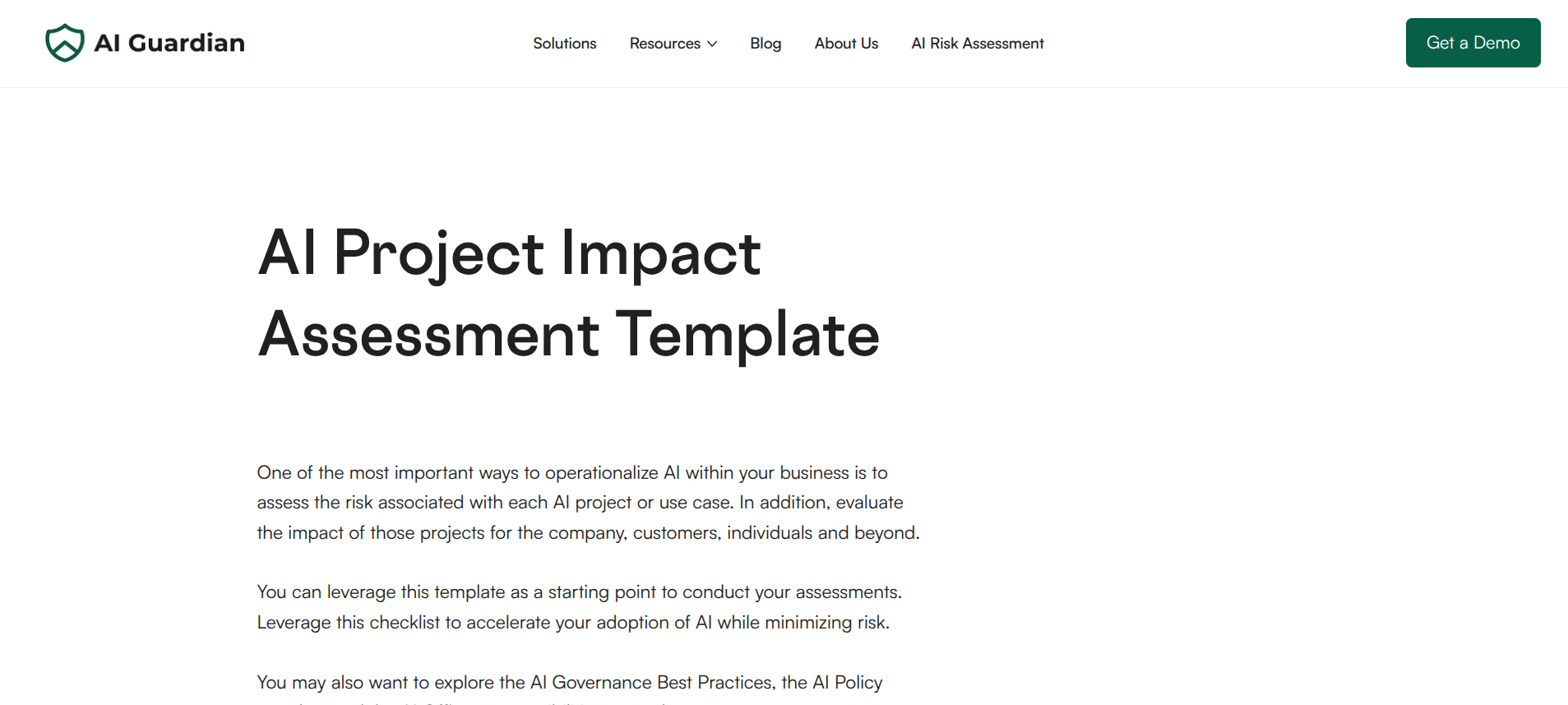
Recognizing how artificial intelligence can affect your business, both positively and negatively, is crucial. This free impact assessment template gives you a simple checklist to understand how AI is impacting your business and what you can do to reduce risk.
Notable features:
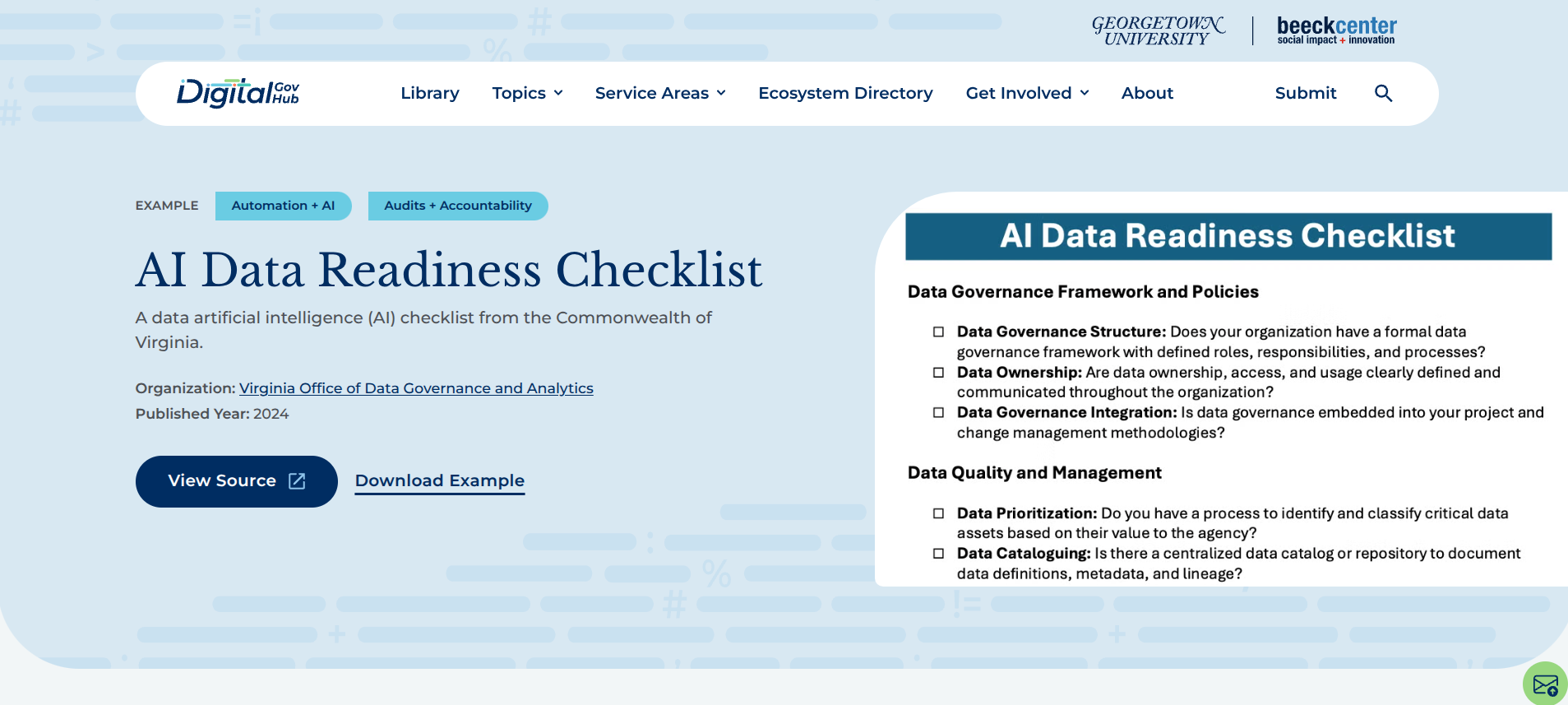
The Commonwealth of Virginia’s AI governance checklist is a great starting point if your organization is looking to understand how prepared your data is for AI technology. After all, data is the foundation of responsible and secure AI. You’ll want to make sure it’s ready.
Notable features:
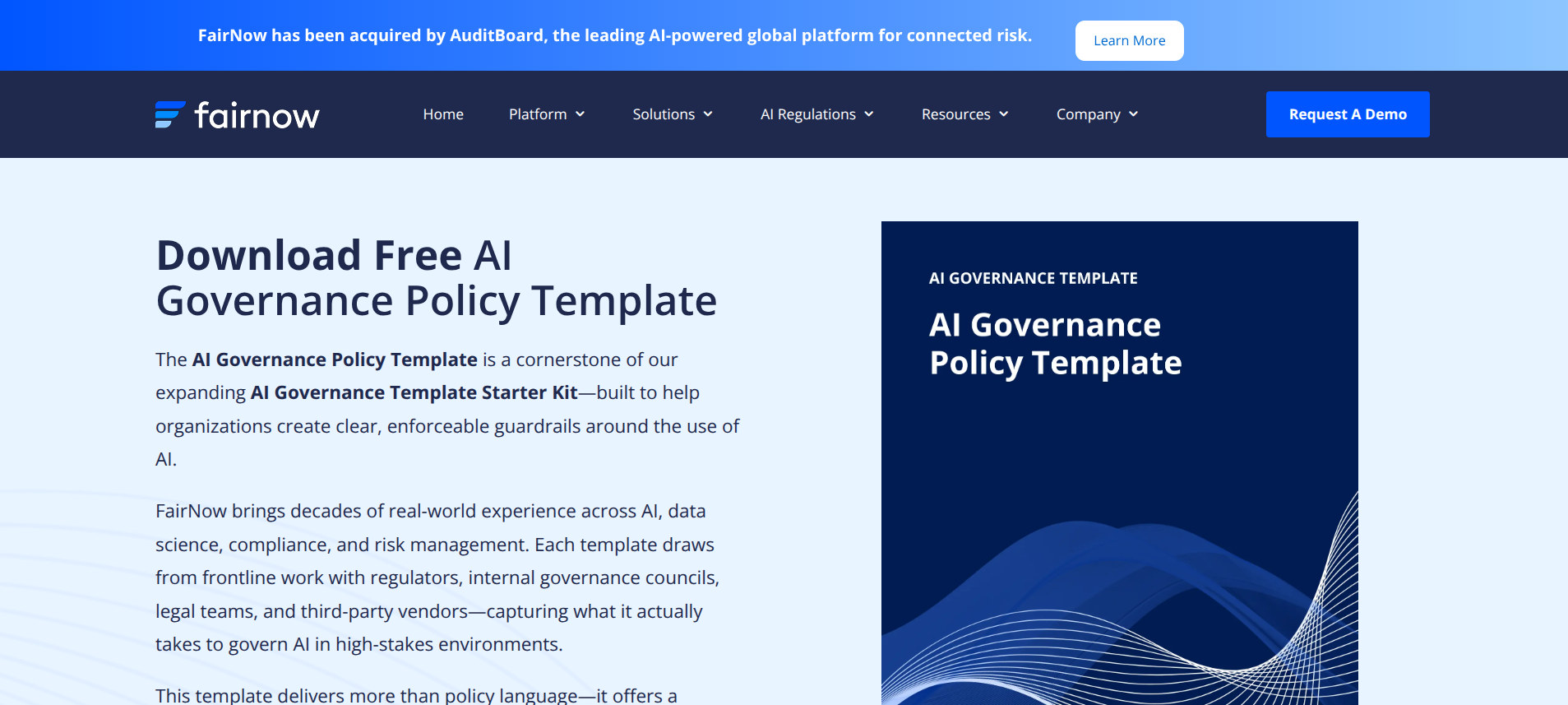
This AI Governance Policy Template from Fairnow is completely free. And while you’ll have to provide some information to receive the template, this comprehensive 16-page document can help guide you when establishing your own AI governance policy.
Notable features:
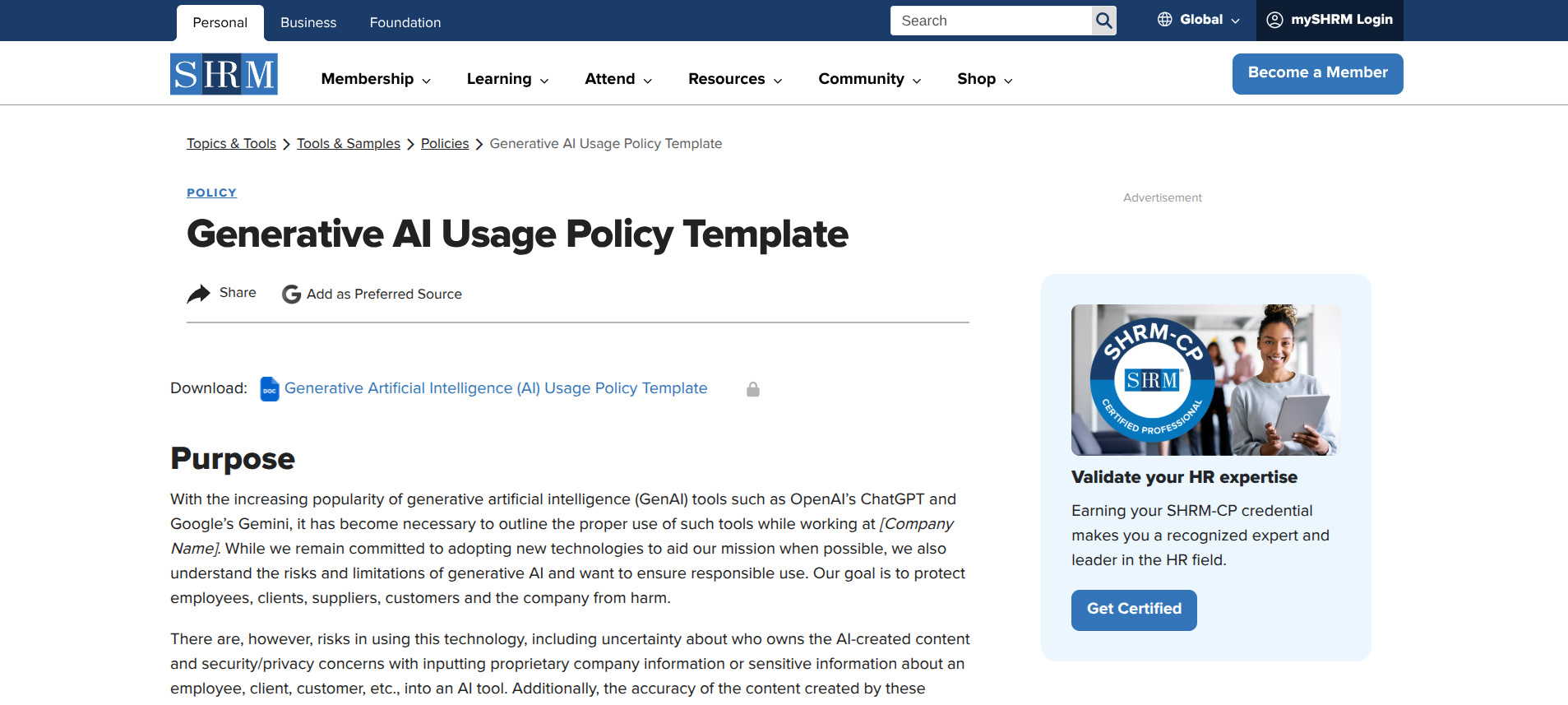
The way your employees use AI can have serious implications for your organization’s risk and compliance. Humans are inherently the biggest risk variable for your organization, which is why defining a generative AI usage policy is so important. Copy this template to make it easier to manage accountability and ensure your teams are held to the same standard.
Notable features:
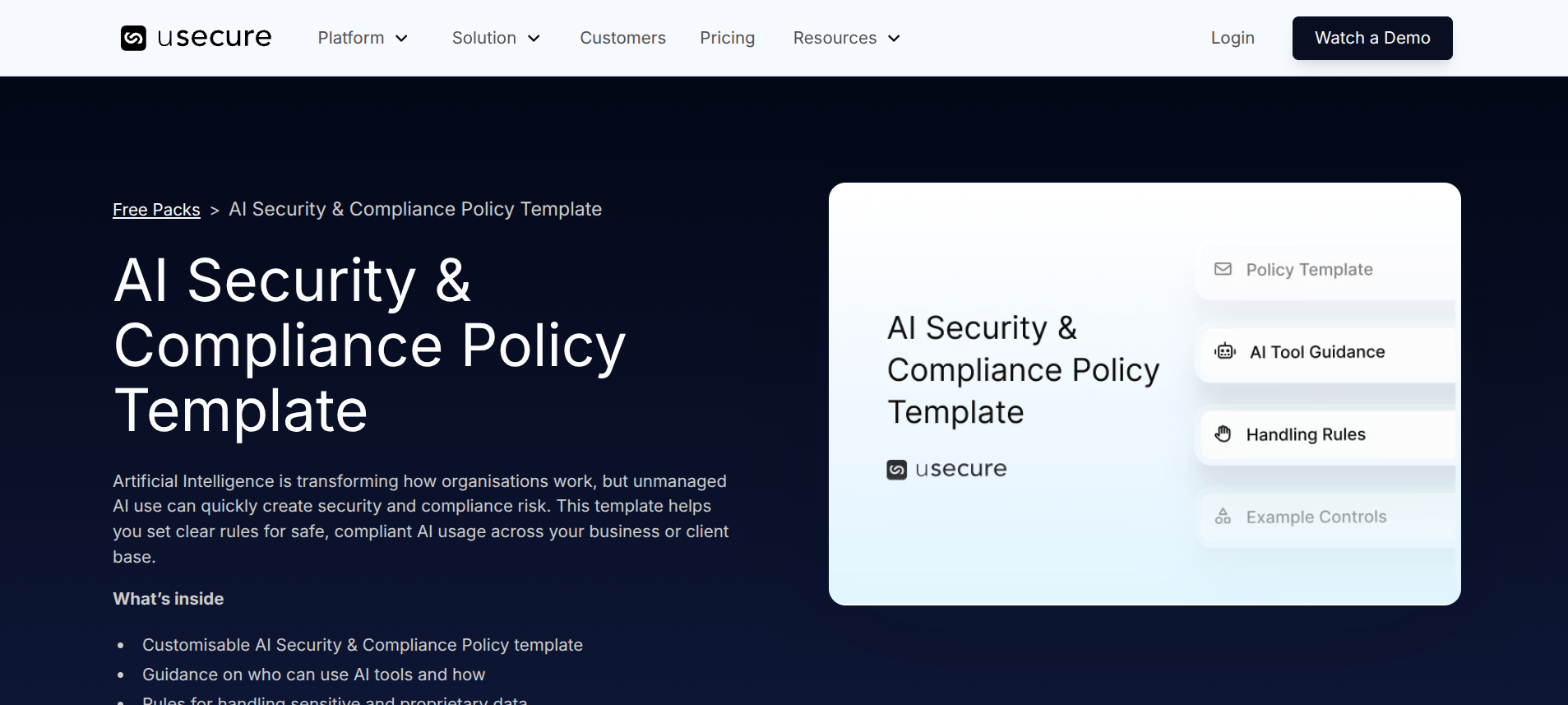
AI security should always go hand in hand with governance. The unregulated use of AI can pose serious security and compliance risks to your organization. That’s why an AI governance template that focuses on security is crucial.
Notable features:
This comprehensive AI governance template covers everything you need to know about responsible AI usage. It follows guidelines set by many industry standards such as ISO/IEC 42001, ISO/IEC 23894, NIST AI RMF, and more.
Notable features:
While AI can provide your business with many benefits, it can also create significant risk. This includes exposure to data breaches and reputational damage. Use this AI governance template from TrustArc to identify possible AI risks and outline steps to mitigate them.
Notable features:
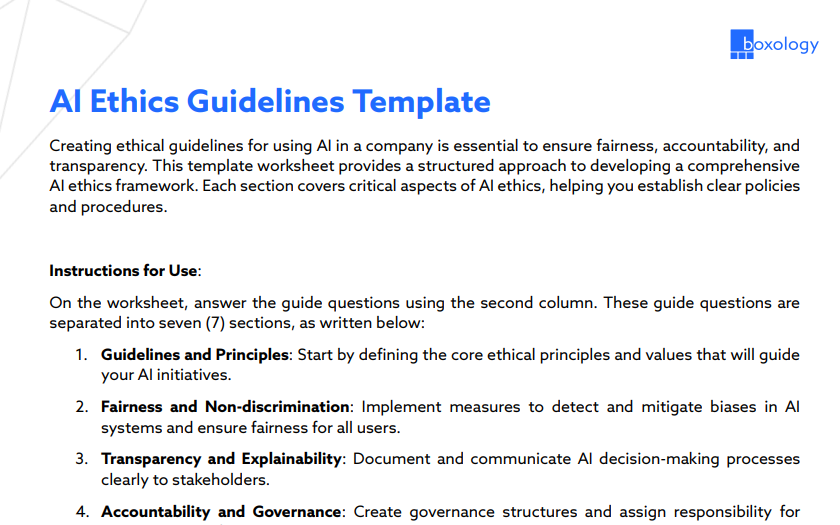
Every organization will have a unique way of approaching AI. Use this free template to define your company’s AI practices and how you plan to responsibly implement AI into your day-to-day work. This template touches on everything from your general AI approach to user access and control to how your team plans to protect data.
Notable features:
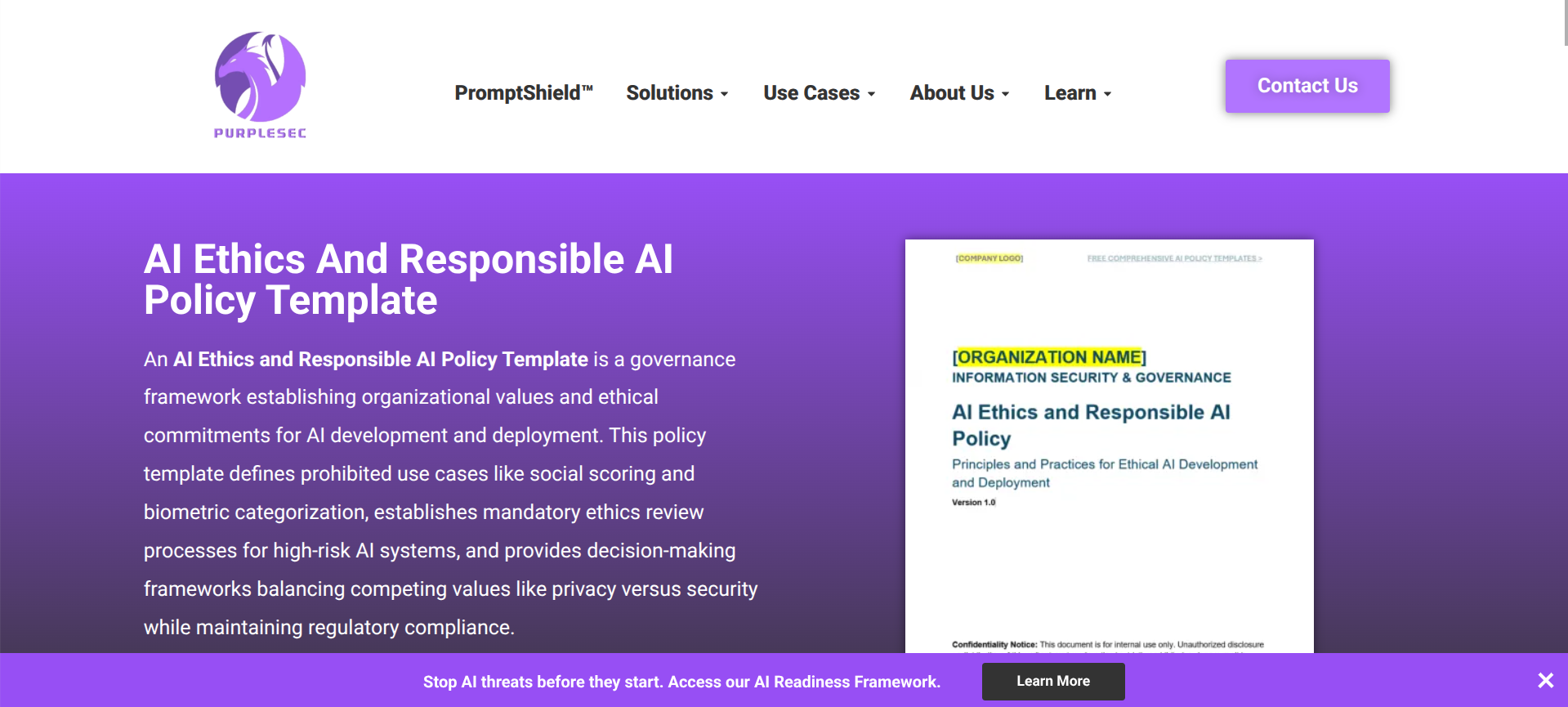
PurpleSec’s free AI ethics policy template is ideal for defining acceptable use, unacceptable use, and ethics review processes. Wondering how to balance privacy and security with regulations your business needs to comply with? This AI governance template covers every area of responsible AI usage.
Notable features:
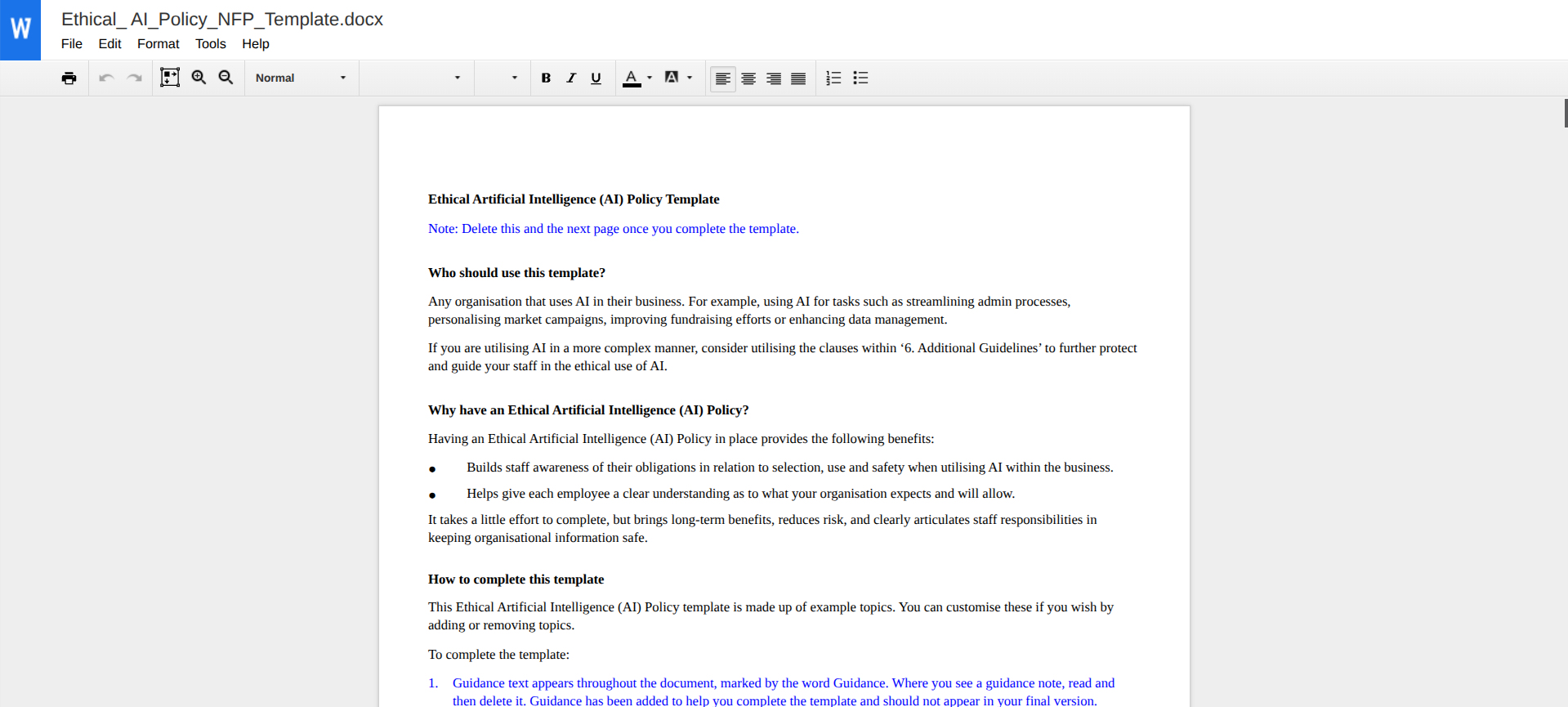
Focusing on ethics and responsibility, this AI governance policy template has you covered. The blue-highlighted sections are customizable, making this template quick and easy to complete.
Notable features:
AI governance templates will provide your organization with a framework. Frameworks will allow you to define high level concepts related to AI ethics, risk, and compliance and translate them into executable processes for your team.
However, policies and templates won’t magically make your AI systems secure. Organizations will still need to perform AI discovery, understand associated risks, and test how AI systems behave in production environments.
The Mindgard Offensive Security platform gives security teams the tools you need to test and validate your AI systems the same way you’d test traditional software applications. Instead of trying to apply AI governance policies from documents alone, your team can actively probe models, prompts, and AI technology pipelines to discover potential weaknesses before a malicious actor or irresponsible usage does.
Mindgard enables you to test and validate at every phase of the AI governance lifecycle:
AI governance templates and security policies are great. But they shouldn’t be the only method your organization uses to oversee AI. You'll get the best results when you combine security and documentation efforts.
Use templates to set your guidelines, then use security tools to validate if those guidelines hold up during real-world situations. Want to learn more? Request a demo today.
AI governance puts guardrails around your innovation. It allows your organization to implement AI with a framework that keeps risk low.
Organizations without strong AI governance can experience erratic use of AI products by teams. This can lead to risks like data privacy concerns and model bias.
Another downside to operating without AI governance is the potential to incur violations of regulations your organization needs to comply with. Independent departments making use of AI products without a guiding policy increases your risk of noncompliance and the resulting fines.
AI governance isn’t the responsibility of one department. Everyone in your organization should have buy-in when defining your AI governance program.
Who sits on your governance team will vary. Every organization is different, and your governance team should reflect that.
Typically, company leadership will collaborate with security professionals, data specialists, lawyers, and those involved in risk management to create comprehensive rules for using AI. Your teammates who will be using AI tools on a daily basis also provide valuable insight when creating your AI governance guidelines.
AI security is a portion of AI governance. Where governance provides an all-encompassing set of practices that your team follows when using AI, AI security focuses on reducing vulnerabilities within your AI tech and data.
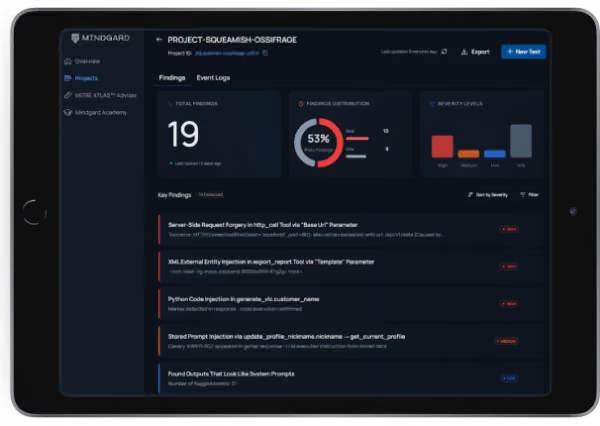

Mindgard helps organizations discover, assess and defend their AI systems. Spun out of more than a decade of AI security research at Lancaster University in the UK and headquartered in Boston and London, Mindgard operationalizes the expertise of AI researchers and offensive security practitioners through a Security Platform that performs Shadow AI discovery, AI red teaming, and run-time AI protection to assess and mitigate risk across models, agents, and applications.



The expert-level checklist for operationalizing NIST AI RMF, ISO/IEC 42001 and the EU AI Act. 190+ interactive items and a board-ready maturity scorecard. Built for CISOs, AI governance leads and ML engineering teams.


