
AI data security templates provide structured, reusable frameworks that standardize how sensitive data is accessed, handled, and protected across AI systems, helping organizations reduce risks like prompt injection, data leakage, and unauthorized access when combined with technical controls and continuous validation.
Every AI model relies on data, which makes strong AI data security practices essential for protecting sensitive information. However, many organizations lose control of sensitive data after it enters AI systems.
Attackers and end users can extract confidential information from prompts, model responses, integrations, and lax access controls. These security concerns are in addition to traditional data breaches, which continue to rise in frequency and expense.
Documentation and enforced controls can help your organization mitigate risk, but documentation alone won’t prevent data exposure. Technical controls, along with consistent validation of those controls, also play important roles in mitigating risk.
In this article, we cover how AI data security templates help you standardize controls, and we highlight 10 templates to help improve your security posture.
Instead of creating policies or controls from scratch every time you need them, you can create an AI data security template once and then apply it to different situations. These templates offer a structured, repeatable approach for handling data across all of your AI systems and aligning with a formal AI risk management framework.
Whether you’re launching a new model or integrating a new dataset, templates standardize the process for securing sensitive information and supporting consistent AI risk management across systems. The templates in this guide touch on different aspects of development, but at their core, they outline:
AI systems behave differently from traditional applications, making them more vulnerable to unique AI security risks such as prompt injection attacks. They ingest large volumes of data, generate new content, and interact with external tools. Traditional IT templates fail to address these behaviors.
AI data security templates define controls for training data ingestion, prompt handling, model outputs, and downstream integrations, which strengthen generative AI data security across the full AI lifecycle.
Strong data protection starts with the right building blocks. Borrow these ten AI data security templates to standardize controls from the start.
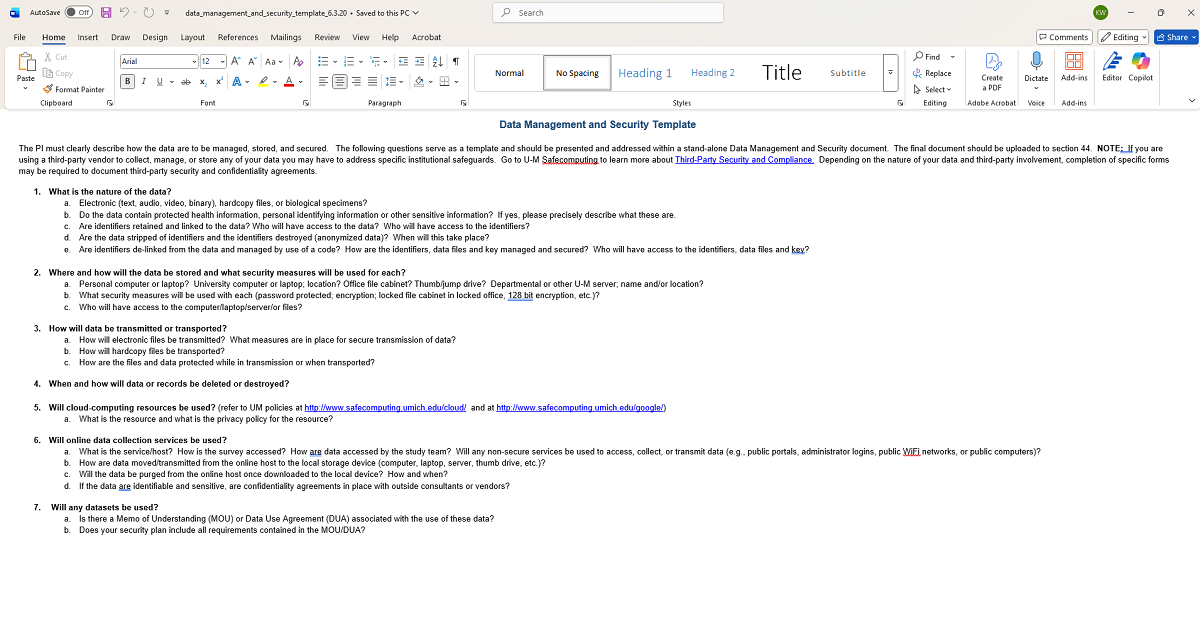
While this template is relatively bare-bones, it provides a helpful structure for creating a custom AI data management and security plan for your organization. Bring in stakeholders from IT, legal, leadership, and other areas of the business to answer these questions and create a policy tailored to your exact needs.
Notable features:
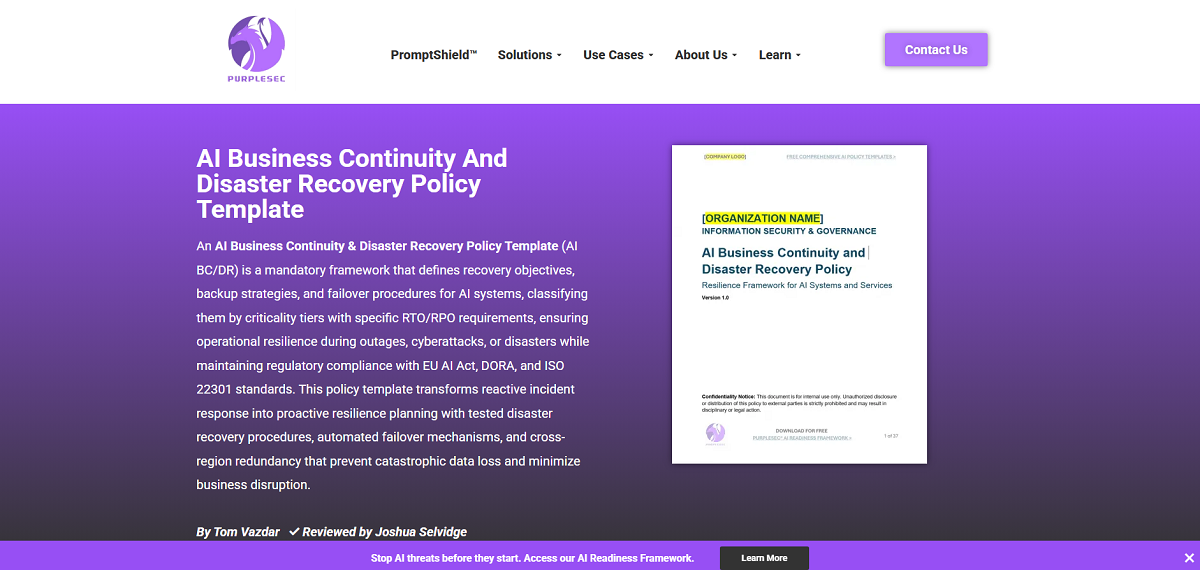
PurpleSec’s free AI data security template provides a much-needed guideline for managing disaster recovery. Everything from breaches to natural disasters can further compromise data, so it’s important to have a pre-written plan for managing these tricky situations without worsening data loss.
Notable features:
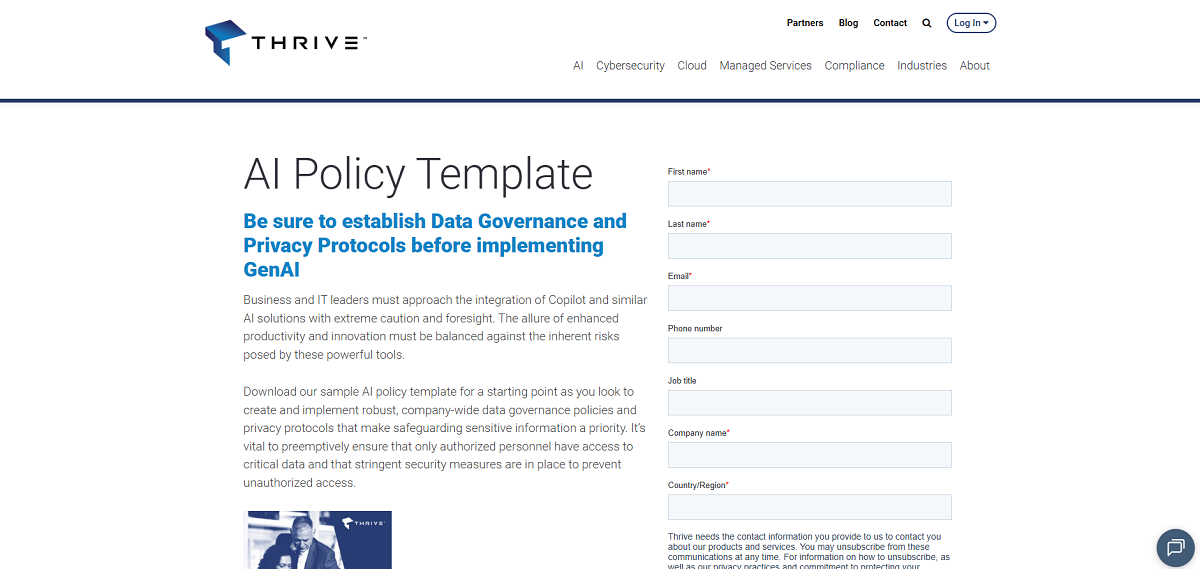
You need to provide your contact information to download this template, but it’s a helpful starting point for writing an AI policy for your organization. It focuses on privacy protocols for Copilot and other popular AI tools, as well as guidelines for determining who qualifies as authorized personnel.
Notable features:
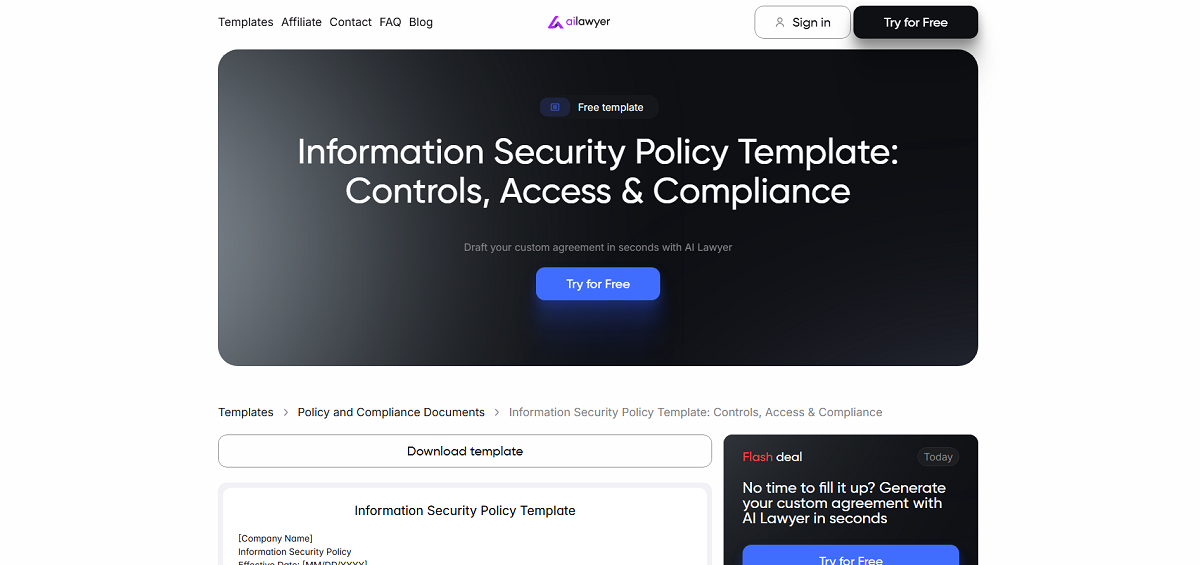
This all-in-one data protection template from AILawyer is available for free. However, it’s a more high-level policy, so you’ll need to add more detail on roles and responsibilities, more specific access controls, and limitations on acceptable use.
Notable features:
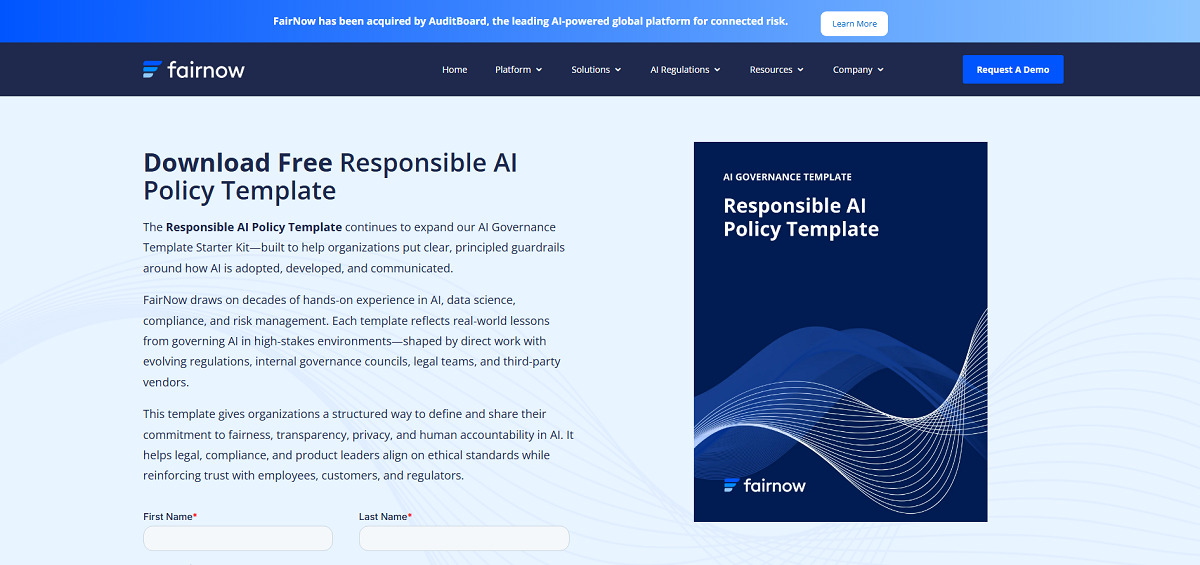
Using AI is one thing; wielding it responsibly is another matter entirely. This template affects AI data security by outlining responsible use, which has a direct impact on data protection. If you need principled guardrails, this template includes processes for adoption and development.
Notable features:
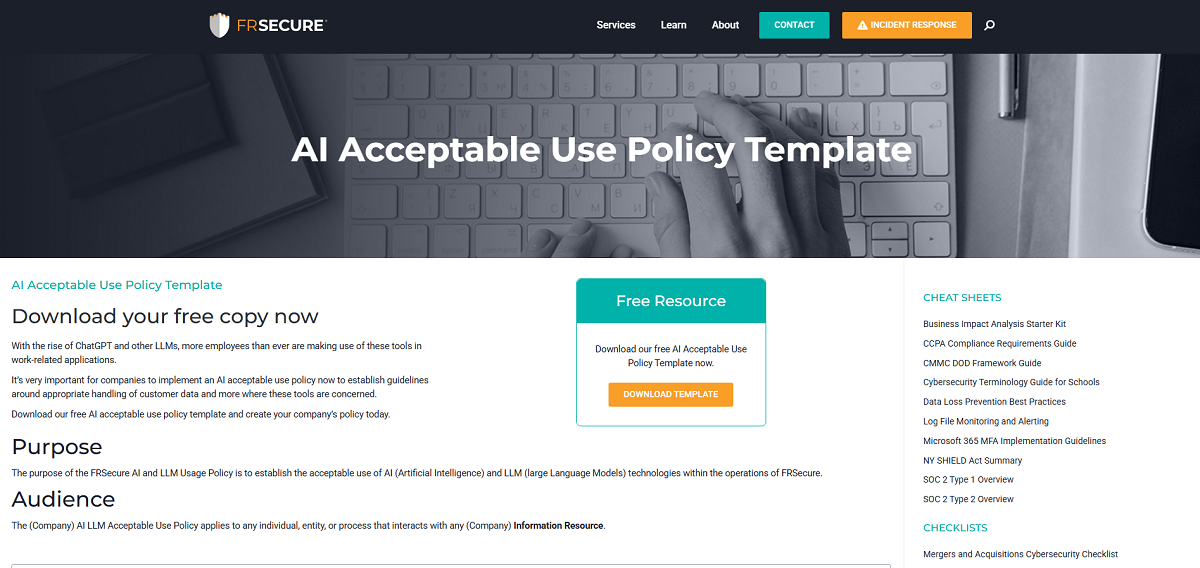
This free acceptable use policy template is another helpful tool for training employees and vendors on the proper use of AI. In addition to requiring everyone to sign this policy, you should also outline what data types AI should never process.
Notable features:
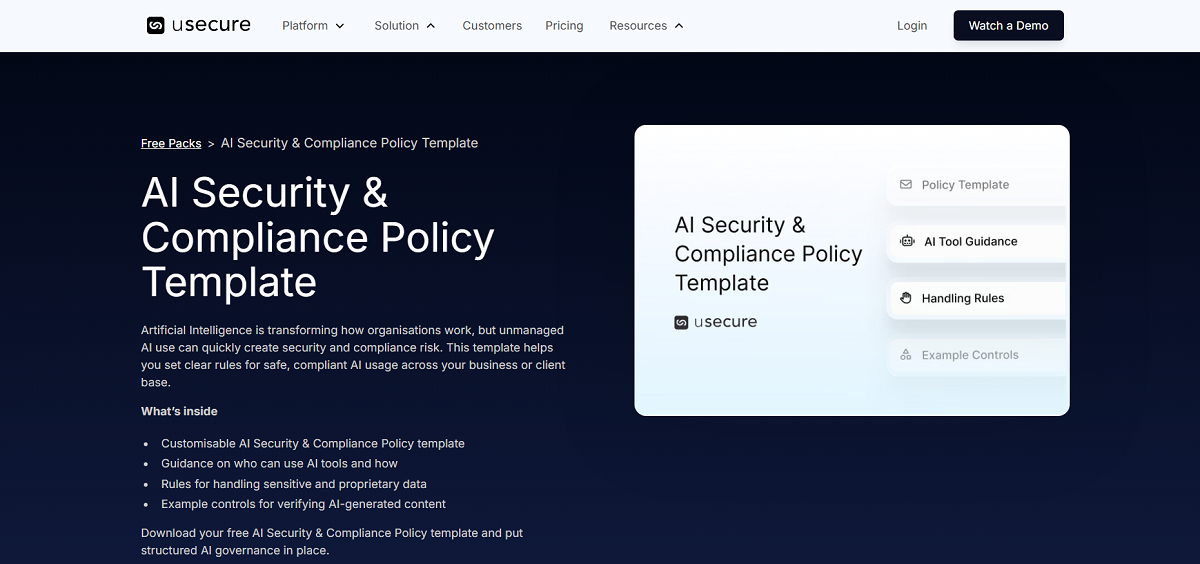
Security and compliance go hand in hand. Use this AI data security template to address both reputational and regulatory concerns in one document.
Notable features:
Privacy controls and governance have a big impact on data security. This free AI data security template, developed by the DSCI Member and Strategic Advisory, provides concrete examples of privacy and governance controls that keep data secure.
Notable features:
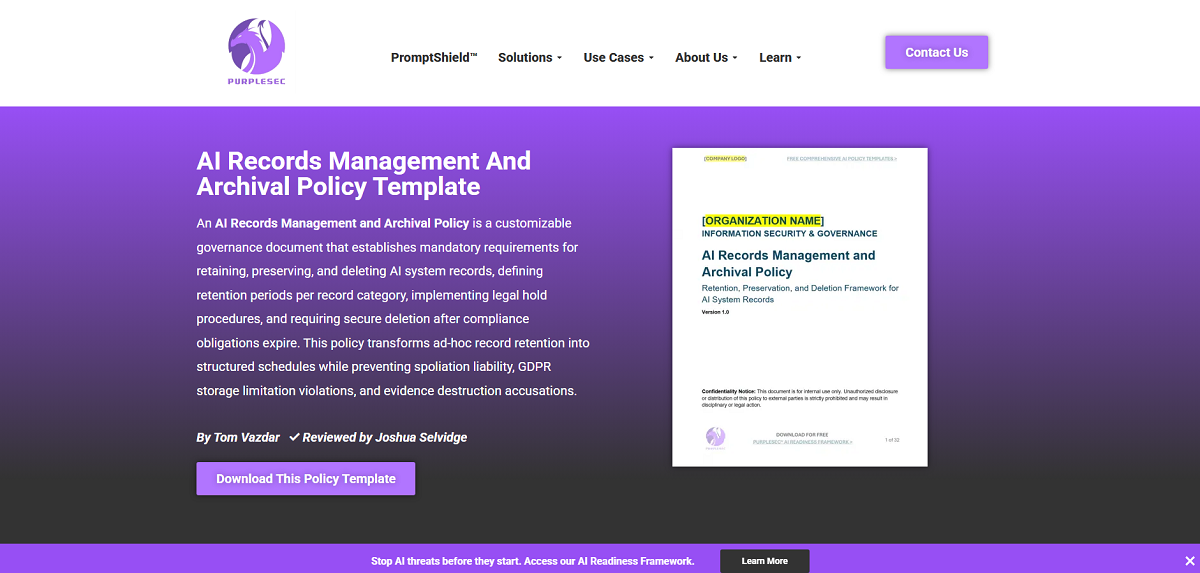
How do you manage and store data? Download this records management and archival policy to document how your team manages AI data, as well as where and for how long you store it.
Notable features:
PandaDoc’s data security policy template is a helpful starting point for defining how your organization manages data, from creation to disposal. This policy focuses less on technical controls and more on employee behavior, which can be a huge risk vector for AI data loss, especially if you’re worried about shadow AI.
Notable features:
AI data security templates give teams a clear starting point. They remove guesswork by defining how data moves through AI systems and clarifying who owns each decision. This structure helps organizations move faster without exposing sensitive information.
However, templates alone don’t ensure AI security without enforcement through technical controls, such as AI guardrails. Data flows through prompts, training pipelines, integrations, and outputs.
Each of these paths creates risk. Policies must directly align with technical controls that monitor behavior, restrict unsafe access, and detect misuse in real time, including safeguards designed to prevent prompt injection attacks.
This is where many organizations fall short. They document the right rules but lack visibility into how models actually interact with data.
Without continuous validation, sensitive information can leak through prompts, tool integrations, or model outputs without detection. That’s why organizations implement prompt injection detection strategies.
Mindgard’s AI Security Risk Discovery & Assessment helps teams understand where risk actually exists and supports continuous AI security posture management across systems. It continuously maps your AI attack surface, analyzes system prompts, and tests models the same way attackers would.
Mindgard’s Offensive Security solution tests AI systems for data-exposure risks before attackers find them, using prompt injection testing and real-world attack simulations in AI red teaming. Security teams can identify prompt injection weaknesses and validate that policies hold up in real-world conditions.
Book a demo to discover how Mindgard can give your security team clear visibility into how data flows through models, where controls fail, and which exposures require immediate remediation.
Traditional data security policies work for general IT systems and applications, not AI. They don’t address the risks posed by AI, including training data exposure and prompt injection. AI-focused templates address these nuances by accounting for how models ingest and generate data and helping reduce exposure to prompt injection techniques.
Templates alone can’t prevent breaches. However, they significantly reduce risk by formalizing best practices and eliminating ambiguity. When you pair the right policies with technical controls and enforcement, your organization’s security posture will improve.
AI data security is cross-functional. Security teams, data scientists, IT administrators, legal counsel, compliance leaders, and executive leaders should collaborate. It may take more time to create a policy with so many stakeholders at the table, but this setup ensures policies reflect both technical realities and regulatory requirements.
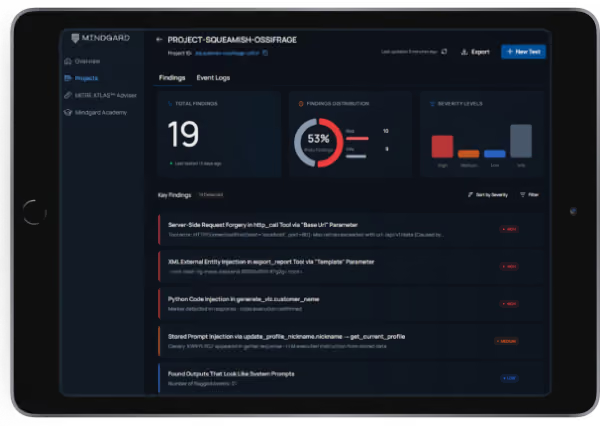

Mindgard helps organizations discover, assess and defend their AI systems. Spun out of more than a decade of AI security research at Lancaster University in the UK and headquartered in Boston and London, Mindgard operationalizes the expertise of AI researchers and offensive security practitioners through a Security Platform that performs Shadow AI discovery, AI red teaming, and run-time AI protection to assess and mitigate risk across models, agents, and applications.



The expert-level checklist for operationalizing NIST AI RMF, ISO/IEC 42001 and the EU AI Act. 190+ interactive items and a board-ready maturity scorecard. Built for CISOs, AI governance leads and ML engineering teams.


