MCP security templates give teams a structured, repeatable way to assess risk, enforce controls, and manage governance as AI systems connect to external tools and data. They help standardize vendor reviews, compliance, and incident response, but must be paired with continuous testing and validation to effectively secure AI deployments.
Model Context Protocol (MCP) essentially connects your AI systems to the outside world. These connections to outside tools and data sets are enormously valuable. They allow you to avoid expensive and time-consuming rework. But the setup does introduce significant security concerns.
When you connect your AI system to data feeds, applications, and APIs using MCP, you’re broadening your attack surface. MCP works great if your security policies can keep up.
MCP security templates allow you to easily model your MCP environment, supporting AI tools, and policies without reinventing the wheel. With MCP security templates you can:
Security templates often include easy-to-use tools such as security checklists, threat modeling questions, access control best practices, logging requirements, vendor review worksheets, and incident response flows.
Cybersecurity evolves quickly, and your team shouldn’t have to spend time building these policies and processes from scratch. MCP expands your attack surface. You need a repeatable process to assess the risks of third-party integrations.
MCP security templates make your security protocols more consistent and easier to implement. From third-party vendor assessments to incident response plans, these AI and cybersecurity templates will keep your AI systems safe while you scale.
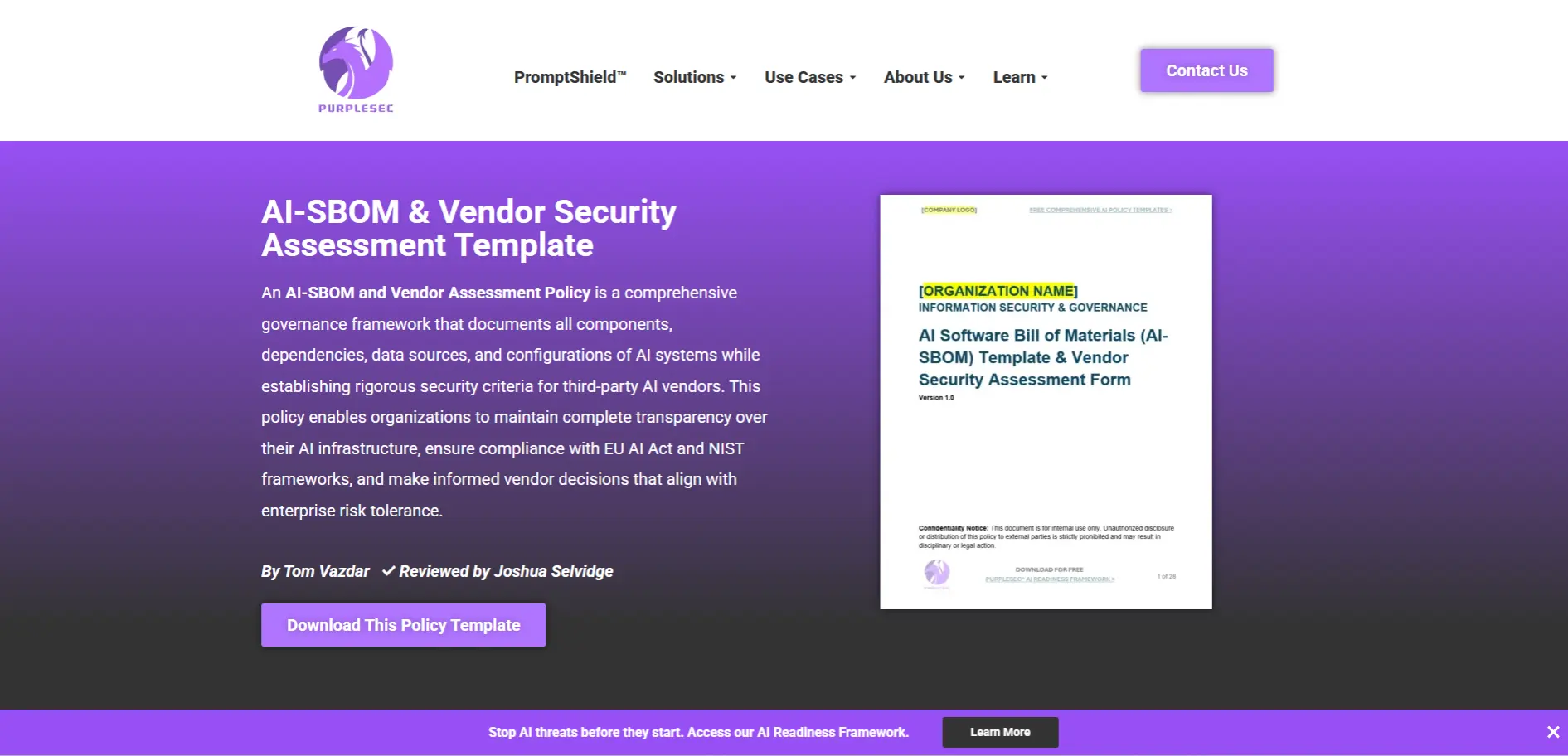
MCP servers allow external programs and third-party sources to access your systems. Essentially, you need to vet every vendor you plan to work with. Use this vendor security assessment template to properly assess your suppliers.
Notable features:
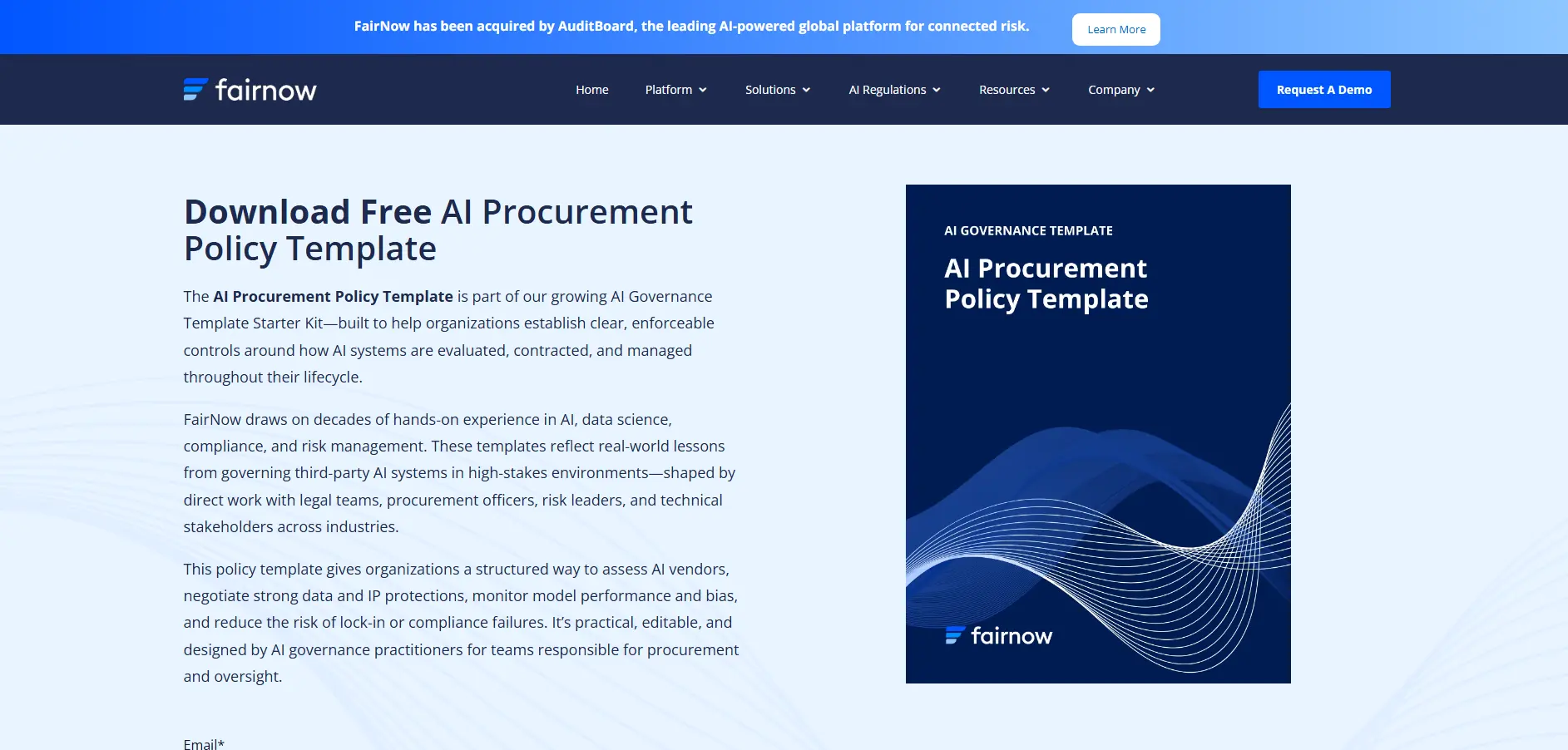
This free template from FairNow will also help you assess potential vendors. While you should still customize it to your needs, it’s a good first step in locking down your MCP environment.
Notable features:
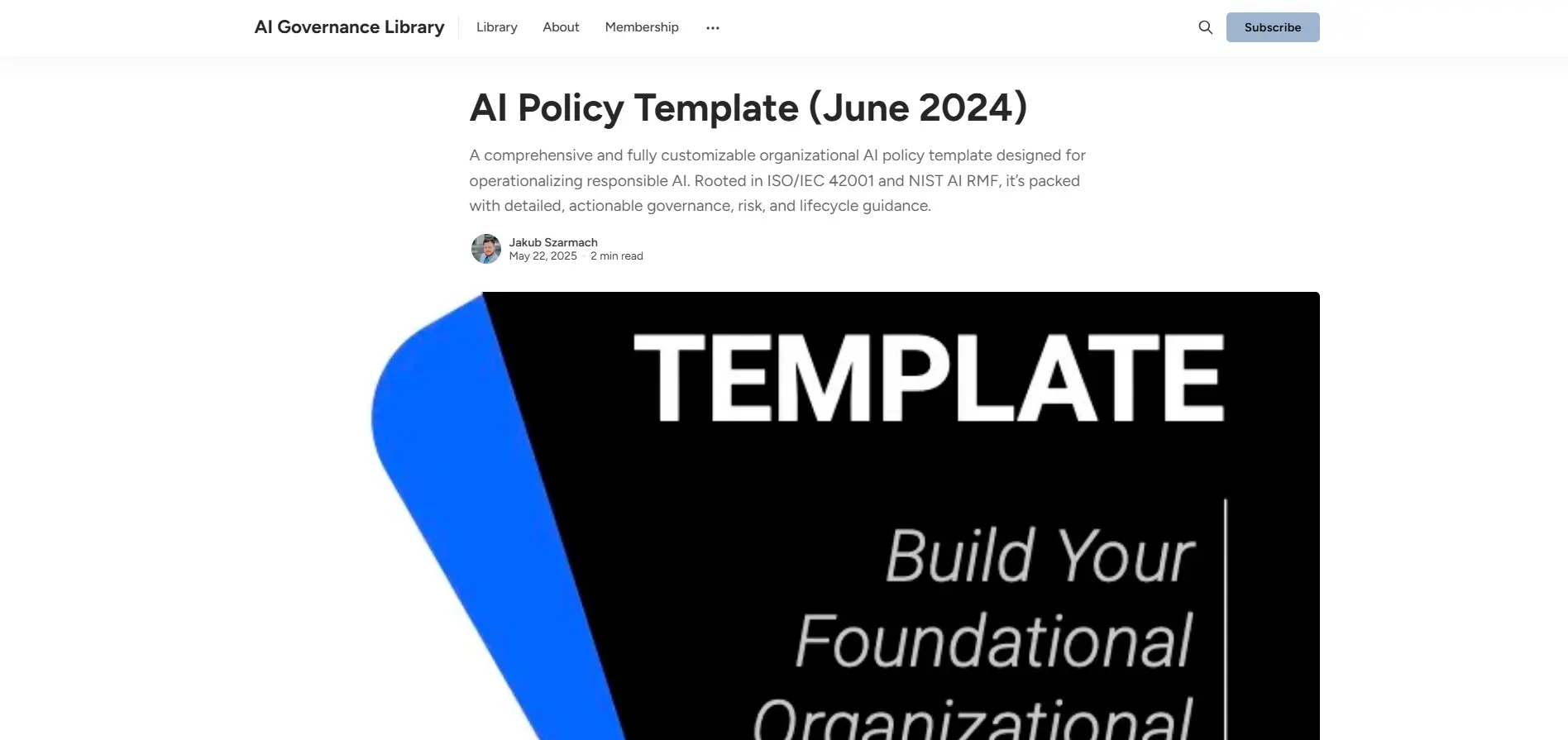
The free AI Policy Template from the AI Governance Library covers every area of governance for AI. Security policies included in this template will impact your MCP. This template is provided as an editable Microsoft Word document that is ISO/IEC 42001 and NIST AI RMF aligned.
Notable features:
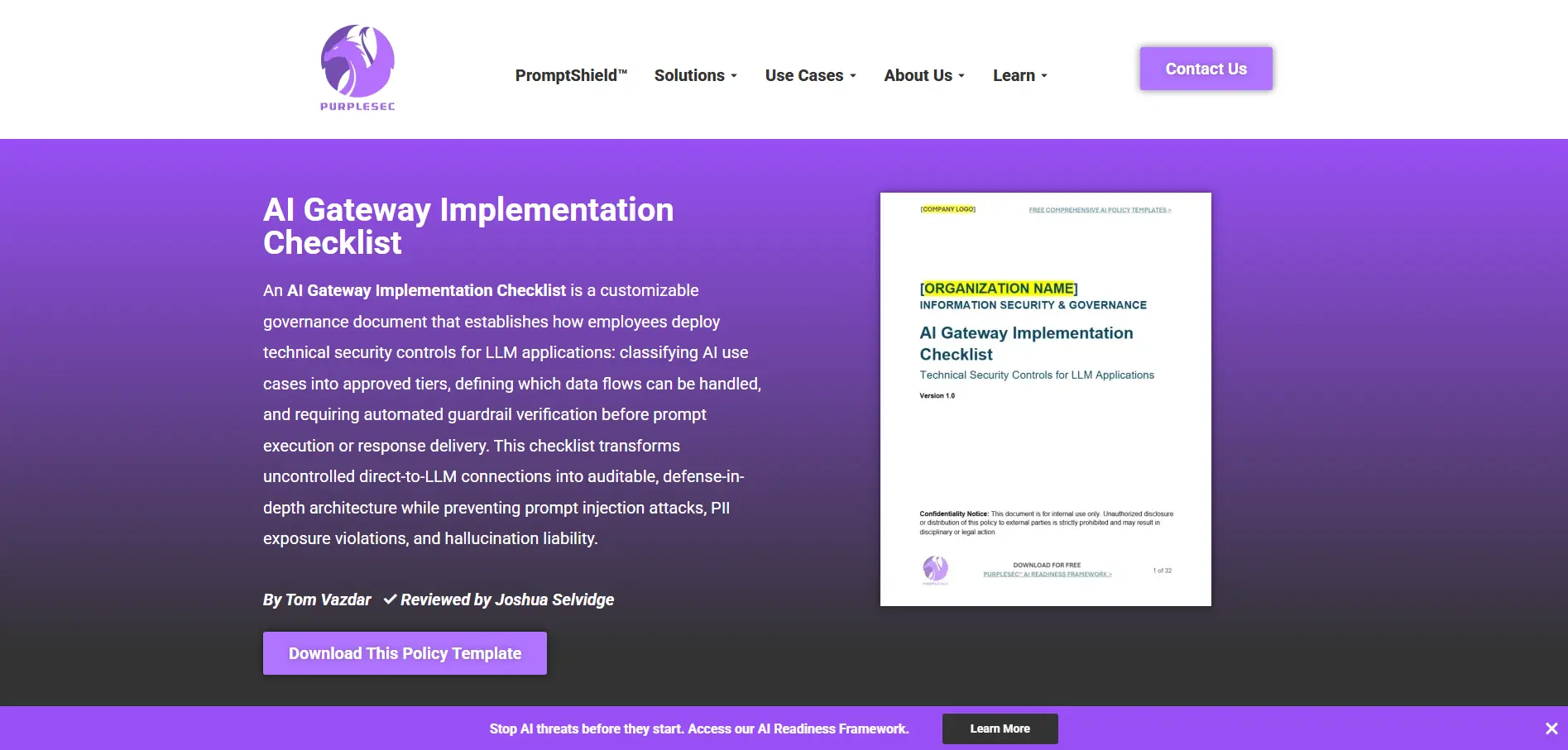
When working with any large language model (LLM) your technical controls are everything. The AI gateway MCP security template includes technical controls your team can use to have better governance over direct-to-LLM traffic.
Notable features:
Gain control over your data, usage, and everything in between with this iteration of the OWASP Top 10 LLM AI Cybersecurity & Governance Checklist. This comprehensive list of over 30 security and governance controls allows you to easily identify where your current systems stand against industry leading best practices.
Notable features:
Worried about compliance? Test your MCP security implementation with this template that maps the NIST AI RMF to 58 controls. Because compliance is only one piece of the MCP security puzzle, this template provides two benefits: helping you secure your system while also building your compliant framework.
Notable features:
No MCP is 100% secure. But you can be prepared with an incident response plan for when the inevitable happens. This is especially important if your breach is due to a third-party service or vendor.
Notable features:
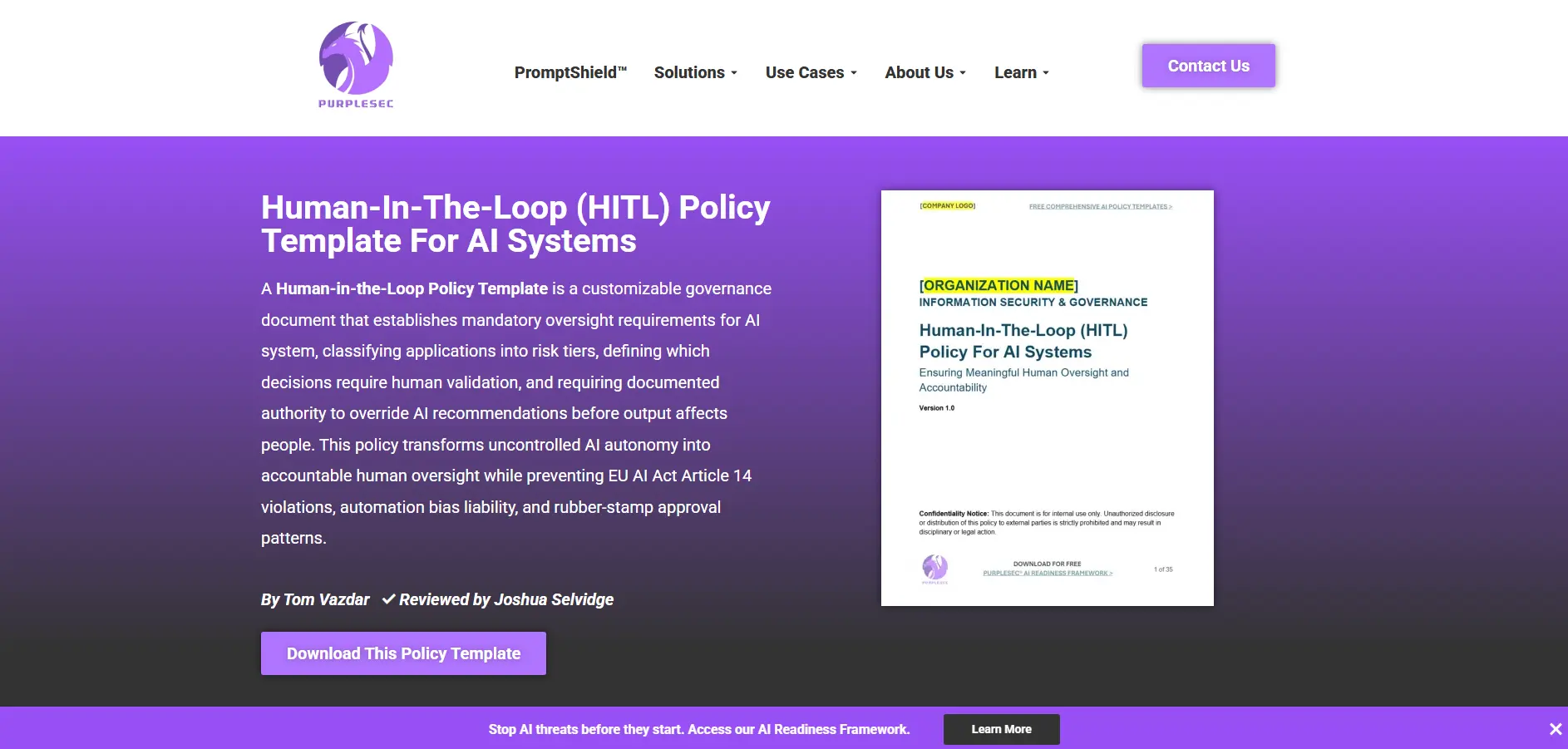
AI is rapidly expanding, and humans cannot be present everywhere AI is. However, you may still need human interaction at specific stages. Utilize this human-in-the-loop policy template to classify AI risk and align with common compliance frameworks such as the EU AI Act.
Notable features:
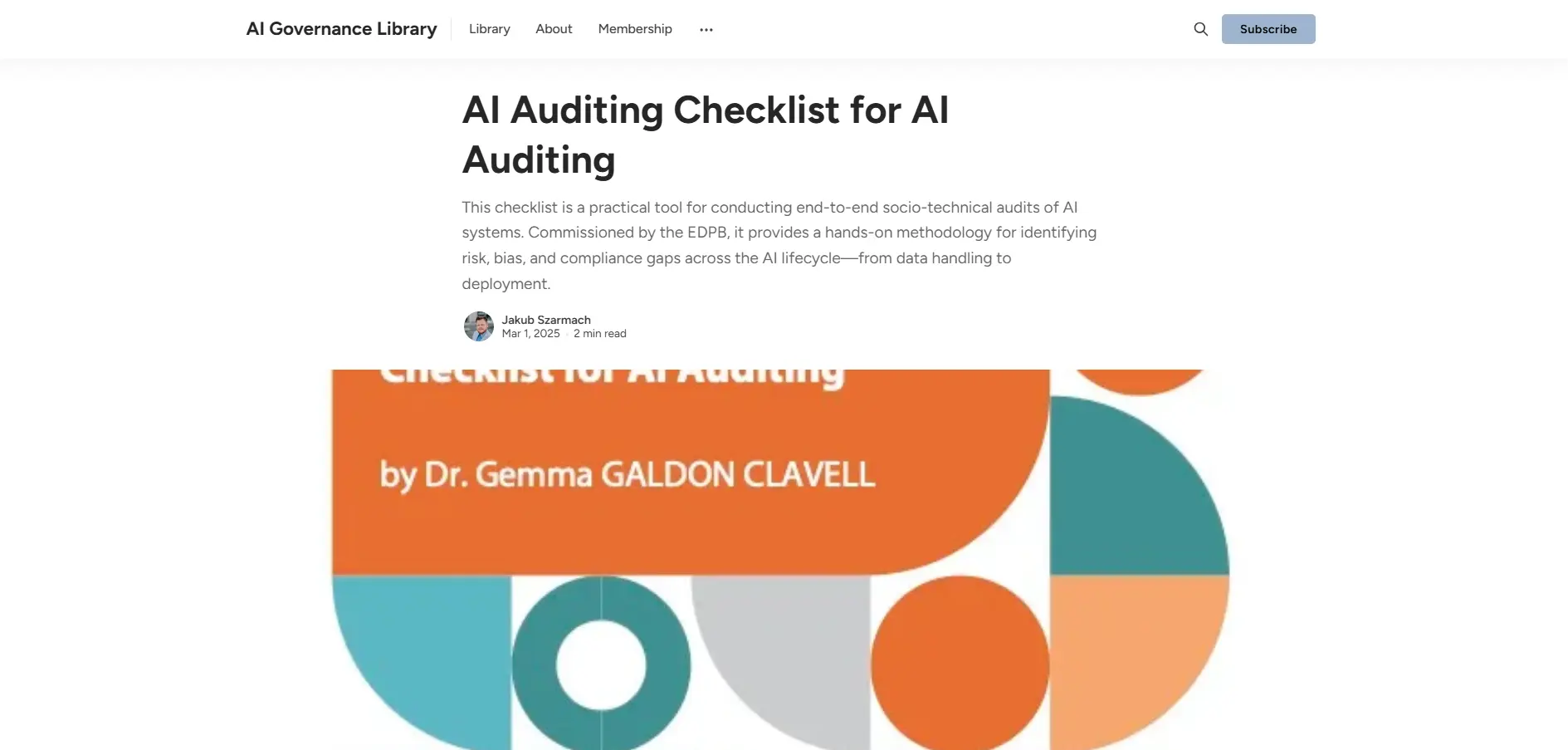
If you know anything about risk, you know your AI-powered systems, including your MCP setup, will have them. Use this MCP security template to help provide consistency during internal audits and identify potential socio-technical risks early on.
Notable features:
This free template is designed for nonprofits, but anyone can download it and tailor it to their organization. It’s a great resource if you’re a less-technical business in need of an IT and cybersecurity policy. These can impact your MCP protections as well, especially if you’re using third-party vendors to do the tech-heavy lifting for you.
Notable features:
MCP security templates allow you to define security policy, but they won’t magically secure your AI deployments. Security teams must know how attackers will exploit AI tools once they’re deployed. And that’s especially important for MCP environments, where AI components regularly interact with external systems, data, and agents in dynamic ways.
The Mindgard Platform proactively simulates adversarial attacks against your AI components to help identify vulnerabilities that traditional security reviews and security templates miss. Unlike a typical security tool, Mindgard integrates into your workflows to help you discover, prioritize, and remediate AI risks throughout your entire development and deployment lifecycle.
Schedule a demo to learn how Mindgard tests how your system could be compromised and hardens your deployments with runtime protections to prevent attacks like prompt injection, data leakage, and more.
Red teaming attacks prove how MCP will behave under real-world conditions, not just ideal scenarios. Red teaming is particularly useful for finding unsafe tool usage, privilege escalation paths, and prompt injection vectors.
Traditional integrations like APIs tend to be more focused and constrained. MCP is a highly flexible option in which models can chain commands together and reference external resources unpredictably. There are inherently more abuse vectors as a result.
Assessing MCP risk means balancing the utility of a server against how it can abuse trust. Don’t just consider what the server is supposed to do. Consider what systems it can access, what actions it can trigger, what data it can expose, and how it authenticates requests.
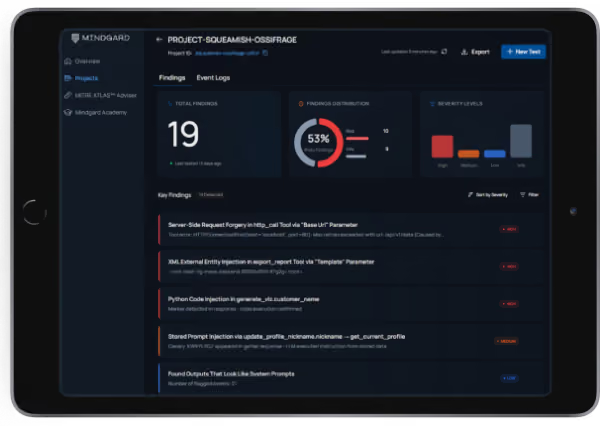

Mindgard helps organizations discover, assess and defend their AI systems. Spun out of more than a decade of AI security research at Lancaster University in the UK and headquartered in Boston and London, Mindgard operationalizes the expertise of AI researchers and offensive security practitioners through a Security Platform that performs Shadow AI discovery, AI red teaming, and run-time AI protection to assess and mitigate risk across models, agents, and applications.



The expert-level checklist for operationalizing NIST AI RMF, ISO/IEC 42001 and the EU AI Act. 190+ interactive items and a board-ready maturity scorecard. Built for CISOs, AI governance leads and ML engineering teams.


